
Votary
Archetype
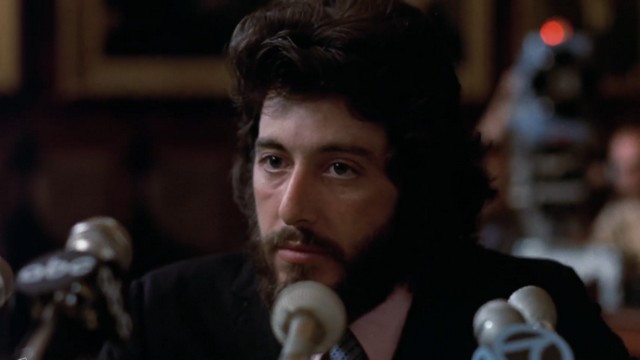
“I hope that police officers in the future will not experience the same frustration and anxiety that I was subjected to … at the hands of my superiors because of my attempt to report corruption.”
—Frank Serpico
Serpico (1973)
Votary Characters
Archetypal votaries are faithful officers in stratified organizations. They’ve been delegated formal powers and responsibilities, and they’re granted a degree of latitude in carrying out their duties. But ultimately, they answer to superiors. Votaries are expected to follow orders handed down from above.
Votaries take the rules and stated values of their respective institutions quite seriously. In most cases, a votary sees the core values as the institution’s reason for being, recognizing that principles do not propagate on their own merits or defend themselves in people’s minds or the fabric of society. Principles must be realized in the world through churches, government agencies, universities, and other such formal structures.
The votary archetype can be seen in school teachers serving under their respective principals, in police or military lieutenants who answer to their captains, and in corporate middle managers who carry out executive orders. Diligent votaries are often plagued by colleagues and superiors who are lazy, apathetic, cynical, or corrupt.
Prominent Examples
- Harry Callahan in Magnum Force (1973)
- Frank Serpico in Serpico (1973)
- Max Schumacher in Network (1976)
- Katsumoto in The Last Samurai (2003)
- Jim Gordon in Batman Begins (2006)
- Sister Aloysius in Doubt (2008)
- Barbara Howard in Abbot Elementary (2021–)
- Nanisca in The Woman King (2022)
Definition
The votary archetype arises from an orientation of reverence and devotion to a given doctrine and service to an institution that (ostensibly) supports and propagates that doctrine among its members and in the wider society.
Dramatic Dimensions
Archetypes are fluid orientations, not rigid types. These are common tendencies and associations—they may or may not apply in any particular case.
Narrative Roles
Motivations
Virtues
Vices
Perceptual Frames
Growth Opportunities
Taxonomy
Father Variants
The votary archetype is a variant of the broader father archetype.
Other variants of the father archetype:
See the whole taxonomy on the archetypes overview page.
Learn more
Volume 2 of The Writer’s Guide to Archetypes: Elemental Dynamics of Character and Drama will feature a deep exploration of the
Votary
archetype. It’s expected to be available in 2029.
Join the mailing list to stay up to date on the publication date and get discounts and previews.