
Why learn about archetypes?
Understanding Human Nature
Archetypes provide a framework for exploring life’s fundamental questions that cuts across religious, philosophical, and ideological divides. While archetypes can’t give us conclusive answers, they can help to make sense of the substantial differences between contradictory perspectives on these topics.
Archetypes are the elements of human nature. Learning about archetypes means learning about ourselves: our desires and aspirations, our fears, our values and moral intuitions, the binding ties of family and friendship, and our place in society and the world.
The Romantic philosopher Jean-Jacques Rousseau claimed that human nature was virtuous but for the corrupting influence of society. The more conservative philosopher Thomas Hobbes claimed the contrary: society is all that restrains humanity’s natural tendency toward selfishness, aggression, and violence. The Jungian view of human nature is more sophisticated. Archetypes provide a holistic framework that can hold both of these perspectives.
If we consider the child and maiden archetypes, we can see the roots of Rousseau’s perspective. And Hobbes’s assertion aligns with the father archetype.
Archetypal patterns can be found at the heart of many of our most popular and enduring narratives. We are inspired by archetypal heroes and tricksters. Archetypal mother figures remind us of the importance of family and community, while archetypal father characters show us the value of logic and moral clarity. Every archetypal image reflects back at us some part of ourselves. We often recognize archetypal motifs, even if we can’t understand them or articulate what we see.
Archetypes as Tools for Writers
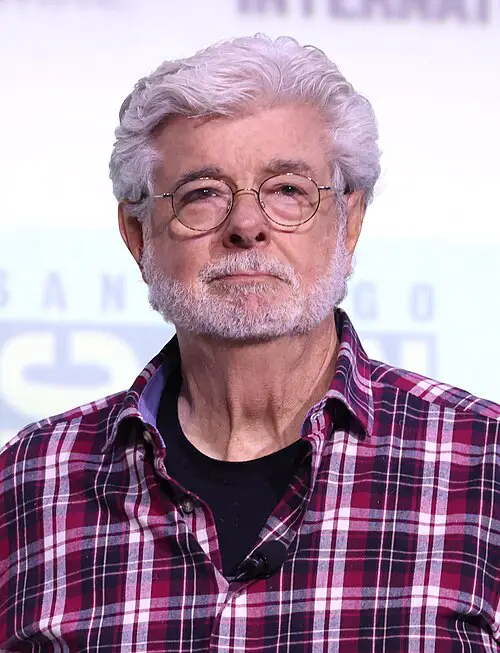
“I had studied Joe Campbell, … and I really tried to take these psychological motifs from mythology all over the world. As a result, I was able to take ideas that go through all societies, through all the ages, and … put them into a razzle-dazzle, Saturday-matinee serial action-adventure film.”
—George Lucas on the archetypal elements in Star Wars
Ever since the incredible success of Star Wars, countless writers have been studying Jungian archetypes and intentionally weaving them into their stories. But what value does this actually provide?
Archetypal insights can help with:
- Understanding the how and why of a character’s perspective
- Designing balanced character webs composed of compelling, dynamic figures
- Conceptualizing conflict and resolution in ways that align with and reveal character
- Aligning dramatic stakes with characters’ worldviews
- Guiding character choices and growth
Knowledge of archetypes can help writers create compelling characters, memorable plots, and vibrant story worlds. But most importantly, it gives writers a way to conceptualize how characters relate to other people and how they see themselves and their place in the world. This deep understanding helps writers design characters who are dynamic and surprising without feeling inconsistent.
For writers, archetypes are a general-purpose tool. These slippery, abstract ideas might not be the go-to solution for any particular problem. But an archetypal perspective brings together various dimensions of story into a single, coherent framework. This allows writers to bring character, relationships, conflict, plot, dramatic stakes, and theme together into a single framework. And unlike more prescriptive story frameworks, this tool never forces characters or plots into rigid templates.
Understanding character perspective, motivation, and decision-making
Writers often have to present characters who are very different from themselves. To do that well, they need to understand how other people think and see the world. That’s not a simple task. Archetypes can help writers understand the how and why of characters’ attitudes and perspectives.
For example, we might think of a trickster figures as disrupters and chaos agents. That’s not actually true in every case. But more importantly, it’s a superficial observation even when it’s true. Some tricksters break rules for the fun of it and behave outrageously to provoke reactions. But there’s more going on below the surface than antagonism for its own sake. Archetypes teach us that tricksters don’t dislike order, rules, and principles so much as they distrust any perspective that tries to describe the world in these terms. Tricksters immediately spot the nuances of human relationships that rules of conduct and etiquette don’t account for. They spot exceptions to metaphysical assumptions that their peers take as axiomatic. All of this arises from an attunement to the world as it is encountered, which supersedes beliefs of how the world must be or ought to be.
Balancing characters and understanding relationships
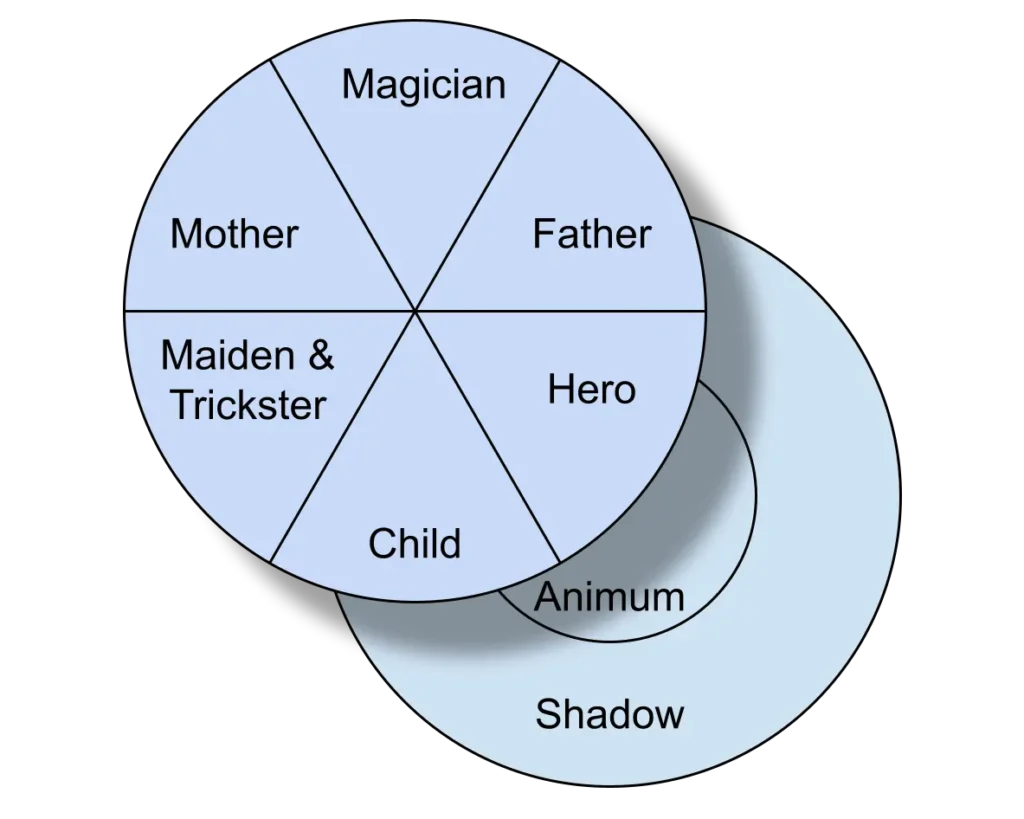
A story’s cast of characters should reflect different perspectives on the central thematic question(s). This allows character choices to reveal the divergent impacts of their distinct views, motivations, and approaches to conflict and obstacles.
An archetypal hero might represent driving passion and an individualistic attitude. That character might be thematically balanced by an archetypal mother with a more socially conscious point of view or an archetypal father who represents a detached, intellectual disposition.
What’s great about this character-relationbship framework is that it can even apply to stories that don’t feature clear archetypal figures. For example, an individualistic character and a more family-focused character will balance each other out like a hero and a mother, even if they don’t really embody those respective archetypes.
Conceptualizing conflict and resolution
Different characters approach obstacles and conflict in different ways. Some attack problems directly with relentless energy, while others look for points of leverage. Some strategize, while others take a trial-and-error approach. Some use formal authority to marshal support from subordinates, and others ask for help from friends and family.
Each character archetype is associated with a basic approach to problem-solving. Tricksters tend to be improvisational and tactical when confronting problems. This means they’re not easily outmaneuvered. Heroes tend to strategize and try to anticipate the outcomes of their actions. So, when a writer puts a hero and trickster in direct competition, archetypes can provide some basic trajectories for the conflict. The hero might win by virtue of a strong but flexible strategy. Or the trickster might prevail by exploiting a tactical advantage that the hero didn’t plan for.
By understanding the strengths and weaknesses of these different approaches and by understanding how they play out against one another, writers can more easily and reliably orchestrate conflict, escalation, and resolution in their stories.
Charting character growth
Each character archetype is rooted in a general orientation to the self, to others, and to the environment. And each orientation comes with its own respective blind spots, which can describe a character’s flaw or ghost. These blind spots provide a writer a starting point for considering the sorts of obstacles a character might encounter. Likewise, the writer can start looking for revelations and opportunities for growth by having the character, in the end, come to see beyond the perspective in that archetypal orientation.
For example, maidens are oriented toward other people and personal relationships. Their character arcs often involve turning inward and learning to follow their own personal passions or to rely on their own judgment and abilities. This is just one set of possibilities. It’s not a prescription. Being familiar with such patterns can point a writer in a productive direction without constraining their options. And writers who understand why these patterns have emerged in the first place might gain a deeper insight into why and how character arcs work.
Useful constraints and infinite possibilities
If you’re a writer, the archetype framework presented on this site is structured enough to help guide your creativity, but it will never box you in. There are no rules or templates. This is just an organized set of observations that you can choose to apply as you see fit. Archetypal patterns can be joined in any configuration you can imagine, each with infinite possible variations.