
What is an Archetype?
An essay by Andrew Zurbrugg
A slippery, ambiguous term
The word archetype has broken into our mainstream vocabulary in recent decades. But what exactly does it mean? Depending on how the word is used, the answer might be obvious. But in psychological or literary contexts, it can be hard to tell what people mean when they talk about archetypes. There are various distinct definitions that overlap with each other. The technical term, as originally conceived by C. G. Jung, is meant to be vague and elusive, despite seeming intuitive at first glance.
When I was at university, I got a cursory introduction to Jungian archetypes. I learned that Luke Skywalker (in the original Star Wars) is an archetypal hero and that Obi Wan Kenobi is an archetypal mentor or “wise old man.” This all seemed pretty straightforward, and I didn’t think about it too deeply at the time. Years later, I picked up a few books about archetypes, hoping to gain a richer understanding of the subject. After reading those, I ended up more confused than before. So, I grabbed a few more books. This was tougher than I expected. I didn’t even have a clear working definition of the word archetype, and the books I was reading didn’t settle the issue. Some were too vague, and some even failed to define the concept at all. Where other books provided clear definitions, they weren’t consistent with each other.
Maybe you’ve run into this problem yourself. Or maybe you haven’t given the matter too much thought until now. Either way, I want to provide some much-needed clarity. In this essay, we’ll discuss why the meaning of the term archetype can be so hard to capture. We’ll review the history of the concept, including several definitions, and end with a technical definition of the word that’s concrete while still holding the complexity of the Jungian concept.
Is archetype just a fancy word for type?
When discussing video games in which players customize their characters’ traits and skills, the word archetype is used to describe a general play style and the corresponding approach to character builds. You might have heard players of The Elder Scrolls and other RPGs talking about paladin, ranger, and tank archetypes. The tank archetype, for instance, refers to a character build focusing on defensive attributes and abilities, allowing the character to endure barrages of direct attacks from enemies. Players of customizable card games like Magic: The Gathering discuss archetypes in the same way. In this case, an archetype refers to a deck-building strategy centered on a combination of specific cards or types of cards. In either of these gaming contexts, the word archetype could be replaced with type, and there would be no loss of meaning, clarity, or specificity.
But what does archetype mean in terms of psychology, mythology, art, and literature? In Caroline Myss’s self-help book, Archetypes: Who Are You?, the author promises to help you discover your personal archetype. She asks: Are you the intellectual, the athlete, the fashionista, or some other archetype? She uses the word archetype to mean a sort of personality type (roughly speaking). Similarly, when writers discuss character archetypes in stories, whether ancient myths, action movies, comic books, or novels, they might also be referring to stereotypes or other schemes for statically classifying characterization. Although they could be referring to something different, let’s continue following this thread.
In all of the above cases, we could say that the word archetype is just an erudite pronunciation of type. If we want to split hairs, we can distinguish an archetype as a specific sort of type. An archetype is a category that metaphysically or creatively precedes all particular entities in it, and it defines those entities in some essential way. An archetype is like a blueprint for the things it classifies. A type could be any sort of category, even an arbitrary one. This distinction should be pretty clear. So, where’s the confusing part?
The first problem in understanding the word archetype is discerning between the uses we’ve discussed above and the Jungian use. When C. G. Jung discusses archetypes, he’s talking about something different, something dynamic and ambiguous. I promise that we’ll get to Jung’s ideas shortly. But bear with me for just a bit before we get there. Unraveling this issue is more difficult than it might sound.
When you come across the word archetype in the wild, it can be hard to figure out what is meant by it because the different definitions overlap. If you’re reading an essay about the hero archetype in action movies, you’ll need to look at the context in order to tell how the word is being used. And the clues are often subtle. Even if you know what to look for, you may have to read several pages before you know if the author is writing about stereotypes, personality categories, or Jungian archetypes.
Further adding to the confusion, the different definitions are sometimes explicitly conflated. For example, Caroline Myss discusses C. G. Jung in Archetypes, indicating that she’s building on his work. But she goes on to describe archetypes in ways that directly contradict Jung. Adding to the ambiguity, she never explains how and why she diverges from Jung’s conception. So, any reader trying to reconcile Myss with Jung will be disoriented. I’m picking on Myss here, but this is just one example of a larger trend.
The second problem with understanding what is meant by the word archetype is the ambiguity and complexity of Jung’s thinking. His notion of archetype can’t be properly understood without knowing the context in which it’s situated. With that in mind, let’s work up to Jung by reviewing some earlier ideas that inspired his thinking.
Platonic forms
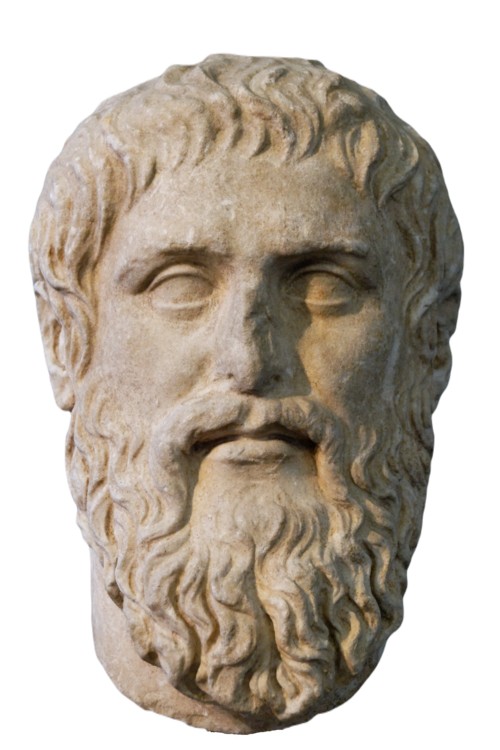
Influenced by Pythagoras and other philosophers of ancient Greece, Plato conceived reality from a dualistic perspective. There’s the everyday material world. And then there’s the hidden world of pure essences that’s more beautiful and more real than the physical world. In this hidden world, everything is perfect and eternally unchanging. This is, of course, quite different from the gross material plane where things constantly change and decay. All things in the physical realm are just flawed imitations of their ideal forms (eidos) that exist in the world of essences.
To illustrate the point, there’s an immaculate maple tree in the world of forms. It’s perfectly shaped and proportioned, with every branch and leaf in just the right place. And it stays eternally just as it is, never shedding its leaves, never dying. This is like the master mold for every maple tree that we see in the material world. It’s precisely this essence that defines an object as a maple tree and not a pine tree or an ocelot or any other type of thing. Because the material world is flawed, all physical maple trees are just imperfect facsimiles of that one flawless form. Now, we can’t see or touch the form, but we do have an intuitive sense of it. Somehow, our minds are tapped into that parallel dimension. It’s through this subtle sense that we can recognize individual maple trees, even though they’re not all the same shape and size.
The forms that Plato described were also called archetypes. So, in Platonic terms, an archetype is a singular, essential form that manifests in a plurality of similar phenomena. We can never see or touch an archetype, but it’s actually more real than the physical manifestations that we encounter in the material world.
Because Plato’s ontology was discredited by later scientific and philosophical developments, we don’t have much use for his particular conception of archetypes. But his ideas are still important to our understanding since we still define an archetype as an abstract form from which actual things are derived.
Elementary ideas
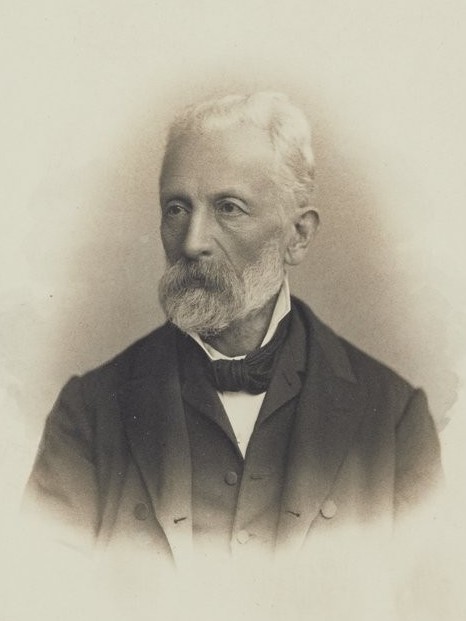
As I’ve already mentioned, C. G. Jung redefined the concept of archetypes for modern use. In addition to Plato, Jung was building on the work of nineteenth-century German anthropologist, Adolf Bastian.
Bastian studied many different cultures and noticed certain symbols and motifs recurred over and over in art and stories all around the world. Cultures that evolved totally separate from each other—that had no common heritage—told stories with remarkable similarities. For example, myths or legends of a virgin birth occur in many cultures. But despite the fundamental similarities between these narratives, each one is still unique; each individual culture has its own take on the virgin birth motif that reflects its particular circumstances and qualities.
Bastian used the term ethnic ideas (or folk ideas) to describe these idiosyncratic variations of the recurring patterns. But of course, the interesting observation here is the appearance of the same fundamental motifs in unconnected contexts, which Bastian called elementary ideas. He hypothesized that all humans are born with the whole set of these elementary ideas imprinted in their minds. This would explain how and why the same imagery spontaneously shows up in different times and places.
Archetypes of the unconscious
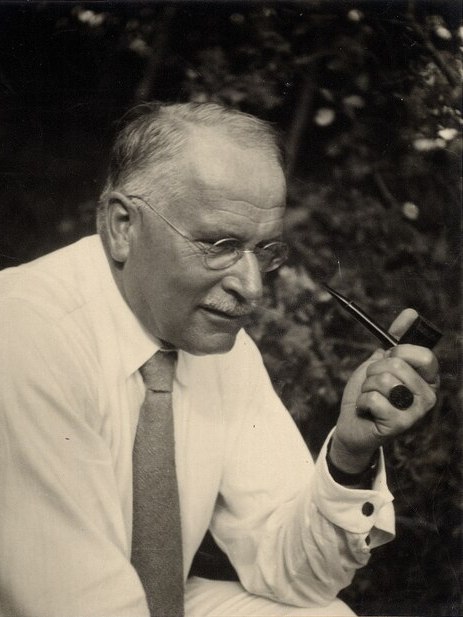
Carl Gustav Jung was one of the world’s preeminent psychologists in the first half of the twentieth century. Among myriad other subjects, he studied dreams as a window into the unconscious mind. Noticing that his patients regularly recounted dreams containing the same mythic motifs that Bastian described, Jung determined that these dream motifs had the same symbolic significance as their mythological counterparts. He went on to develop a theoretical model of human psychology, supported by empirical evidence, that accounted for his and Bastian’s observations.
Jung developed his own terminology to describe these motifs. Instead of using Bastian’s term, elementary ideas, Jung renamed the abstract patterns archetypes of the unconscious. And the myriad visual and narrative manifestations of these motifs that Bastian called folk ideas, Jung called archetypal images.
Building on the work of Freud, Jung’s model divides the psyche into the conscious and the unconscious. He further divides the unconscious into what he termed the personal unconscious and the collective unconscious.
Jung’s concept of the personal unconscious roughly parallels Freud’s subconscious, consisting of unacknowledged desires, repressed memories, and all sorts of other psychic material acquired throughout a person’s life. But his concept of the collective unconscious diverges from Freud’s ideas. According to Jung, all humans are born with the same set of primordial patterns (archetypes) built into the structure of our minds. We all have the same hard wiring, so to speak. The collective unconscious is the part of the mind that’s preformed. By “collective,” Jung doesn’t mean that our minds are all tapping into some shared ethereal psychic well; he simply means that this part of the mind is the same in every individual, regardless of personality and experience.
The collective unconscious is that part of the mind where the archetypes are located. It’s synonymous with the whole set of archetypes. And its function parallels that of our natural instincts.
The difference between instincts and archetypes is that instincts are biological drives whereas archetypes are psychological drives. Instincts determine which objects and events in our environment are salient and how we should relate to them. Our hunger instinct is largely responsible for determining what qualifies as food and what does not. It pulls our thoughts toward lunch, distracting us from work when we still have an hour before our break. Similarly, our sex drive makes us turn our heads toward potential mates. And importantly, these instincts inform how we relate to those respective targets. That is to say, our instincts motivate us to eat appetizing food and pursue intimate relationships with attractive people.
In a similar way, archetypes influence what we determine to be psychologically salient. The hero archetype tells us that setting long-term personal goals is psychologically important, and it motivates us to strive toward our goals with focus, hard work, and determination. Just as we are each attracted to different people and enjoy different foods, we also set different goals for ourselves. But the psychological drive to pursue long-term goals is just as universal to the human experience as the biological drives of hunger and sexual desire.
Archetypes also help us recognize patterns in other people’s behavior, unconsciously shaping how we perceive and interact with them. When you encounter someone who acts in a maternal fashion, you’ll associate that person with the mother archetype. Then, you’ll relate to that individual accordingly. For example, you’re more likely to seek comfort and emotional validation from a mother figure than from someone you associate with the father archetype or trickster archetype. Of course, this process is unconscious. We’re not aware of it when our perceptions and motivations are influenced by archetypal patterns.
Complexes
Archetypes are universal. None of us have our own individual archetypes. But each archetype is tied to what Jung calls a complex, which is unique to the individual. We’ve each had different experiences that we associate with a given archetype. The emotional memories of those experiences are what make up our unique complexes.
For example, the mother archetype is the same for all of us, but your mother complex is different from anyone else’s. We all have unique mother complexes reflecting our different experiences with our mothers and other maternal (or quasi-maternal) figures. If you grew up in a nurturing environment with affirming caretakers, then your mother complex is probably healthy and has a positive affect. If you were neglected or abused by the maternal figures who were supposed to care for you as a child, then that trauma will make up a big part of your mother complex. The emotional memories that constitute your mother complex impact the way you perceive and interact with people who strike you as fitting the mother archetype. Your mother complex also impacts the way that you behave when you’re taking care of children or otherwise see yourself in a matriarchal role (broadly defined).
It’s important to note that psychological processes are complex, dynamic, and subtle. It would be grossly reductive to assume a person will act in a specific way because his mother did this or his father said that.
Two kinds of archetypes
There are two fundamental categories of archetypes: archetypes of personality and archetypes of transformation.
Archetypes of personality include the mother, father, trickster, and shadow, among others. We recognize these archetypes in the attitudes and behaviors of fictional characters, people in our dreams, historical figures and celebrities, and the people we encounter in our daily lives.
Archetypes of transformation correspond to events, especially those that mark significant moments in our lives. We see them most clearly in rituals such as baptisms, rites of passage, weddings, funerals, and important holidays. A bat mitzvah, for example, is an archetypal event. The archetype evoked by this ceremony is meant to bring a sense of closure to childhood. It orients the celebrant toward the next stage of life and the responsibilities of adulthood. The individual is transformed as her identity shifts from girl to woman. Joseph Campbell’s monomyth (a.k.a. the hero’s journey) is essentially a collection of archetypes of transformation arranged in a rough sequence. The call to adventure and the crossing of a threshold are two easily identifiable archetypes of transformation.
A definition of archetype
You probably noticed that I haven’t yet given a strict definition of a Jungian archetype. While Jung spends pages and pages describing archetypes, he never provides a conclusive, concise definition. The following quote from Archetypes and the Collective Unconscious presents an evocative sense of how Jung thinks about archetypes but does characteristically little to paint a clear picture.
[Archetypes] cannot be exhaustively interpreted, either as signs or as allegories. They are genuine symbols precisely because they are ambiguous, full of half-glimpsed meanings, and in the last resort, inexhaustible. The ground principles … of the unconscious are indescribable because of their wealth of reference, although [they are] in themselves recognizable. The discriminating intellect naturally keeps on trying to establish their singleness of meaning and thus misses the essential point; … the one thing consistent with their nature is their manifold meaning, … which makes any unilateral formulation impossible. Besides this, they are in principle paradoxical….
After a lot of reading and thinking about archetypes, I’ve come up with a definition that stays true to the Jungian perspective while providing a degree of clarity that’s typically missing from other definitions, including Jung’s own explanations.
An archetype is a dynamic psychic pattern that is innate and impersonal; it organizes perception and motivates behavior, and it corresponds to some fundamental orientation(s) to oneself, to one’s environment, and/or to other living beings.
Let’s break down this definition and explore the different components. We’ve already discussed the notion that archetypes are innate and impersonal. And we’ve also discussed how archetypes influence perception and motivate behavior, similarly to instincts.
The word dynamic is doing some heavy lifting in this definition. Because an archetype is dynamic, we can’t easily capture it in clear, concrete terms. It’s nearly impossible to pin down what we’re talking about with any sort of precision. This is, at least in part, why Jung’s descriptions of archetypes are always vague and slippery. My definition overcomes the problem of vagueness by defining archetypes dynamically in terms of orientations.
Orientations refer to the different ways we can situate ourselves in our environment and relate to it socially, morally, epistemically, metaphysically, and so on. Thinking in terms of orientations allows us to attain a degree of clarity without being rigid or reductive.
The mother archetype, for example, corresponds (in part) to an orientation to the well-being of family and friends. A mother is responsible for the well-being of her child, a matriarch is responsible for her clan, and Mother Earth is responsible for the circle of life by which all beings live and die. The mother archetype organizes our perception by drawing our attention to the bonds of family and community, and highlighting the values of health, vitality, and safety as opposed to the value of truth, for instance.
Orienting ourselves to the bonds and well-being of family impels us to think in terms of service and social obligations. And this will prioritize and motivate certain attitudes and behaviors. Generally, the mother archetype motivates us to be kind, caring, and nurturing to our children and others close to us. But if one of our family members is acting selfishly with no regard for the rest of the family, the mother archetype can inspire anger and resentment. Or if a stranger is threatening our family, the mother archetype might motivate us to act aggressively, even violently.
Notice how conceptualizing an orientation provides a reasonably solid framework, but it remains totally open. An orientation doesn’t determine or preclude any particular course of action. This openness is what makes archetypes so challenging to understand beyond a purely superficial level. And that can be frustrating if you’re expecting the certainty provided by more reductive frameworks. On the other hand, this openness provides an incredible amount of flexibility and adaptability. After developing a fairly sophisticated archetypal perspective, I’ve found it useful in a wide variety of situations. It allows me to really understand where all sides are coming from in political divides, philosophical arguments, and the disparate descriptions of social interactions from sociologists and economists, just to provide a few examples.
Archetypal images
Now that we’ve arrived at a relatively clear understanding of what archetypes are, there is one more question we need to address: What might we do with this knowledge? I’ll answer this question with a general audience in mind as scientists, psychologists, and therapists would inevitably approach the question very differently.
Thanks primarily to the popularity of Joseph Campbell, we often think of archetypes in terms of narrative. This is instructive since we often think of our own lives in narrative terms (framing our present circumstances according to our past and our expectations about the future). Likewise, we make sense of the larger world through the narratives we personally ascribe to: God created plants, animals, humans, and so on. God will punish us if we violate divine law. Or, life began as single-celled organisms, and it evolved into the diverse life forms we know today over the course of a couple of billion years. Humans are part of nature, so it’s important for us to maintain biodiversity.
When we look at the intersection of archetypes and stories, we can describe archetypes as roles. The role of an archetype is directly related to the orientation that we discussed above. The role of an archetypal mother character in a story involves responsibility for the well-being of others, and it creates an expectation that the mother character should be protecting and caring, but this does not mean a mother character must perform this role well—or at all. The critical factor is that the audience recognizes the role.
This archetypal frame gives us a systematic way of interpreting a story’s meaning. It’s not the only way, or necessarily the best way, to read a given story. But it’s a useful perspective for many stories—especially those that explore timeless aspects of the human experience. It can illuminate the universal themes encoded in the idiosyncratic details of the setting, plot, and characters. This archetypal frame provides us with a vocabulary to discuss certain symbols and metaphors, and it can help us make sense of artistic choices that might appear strange or irrational.
Closing thoughts
As you encounter other discussions of archetypes, I hope this essay will have provided an anchoring reference. The first key takeaway is that Jungian archetypes are dynamic. An archetype cannot be reduced to a set of characteristics or defined by any set of static criteria. The second thing I hope you remember is that archetypes can be understood and discussed with greater clarity if they’re framed in terms of orientations.
Of course, not all discussions of archetypes are about Jungian archetypes. If nothing else, I hope I’ve given you some tools to recognize and understand how the word is being used whenever you come across it.